Non-Visual Art: Letting Go of Perfection

For much of my life, perfection was something I believed I needed to achieve—especially in art. Like so many others, I absorbed the idea that art must meet certain visual standards to be considered successful. Lines should be clean, colors balanced, and composition pleasing to the eye. What is Non-Visual Art? When I lost my sight, those rules no longer applied, and for a long time, that felt terrifying.
Eventually, it became freeing.
Non-visual art does not rely on appearance in the traditional sense. It exists beyond the gaze of the viewer and beyond the artist’s ability to see the finished piece. That reality forced me to confront a difficult question: if I cannot see the outcome, what does perfection even mean?
Redefining Perfection through Touch | Non-Visual Art
Letting go of perfection was not an instant decision. It was a process—one filled with uncertainty, vulnerability, and trust. I had to trust my instincts, my memory, my sense of touch, and my emotional connection to the work. Instead of correcting what looked “wrong,” I began listening to what felt right. Texture, movement, rhythm, and emotion replaced symmetry and polish as my creative guides.
In a visual world, perfection is often external. It is judged by others, measured against trends, or compared to expectations. In non-visual art, perfection becomes internal. It is about honesty, presence, and intention. A piece is complete not when it looks right, but when it feels right.
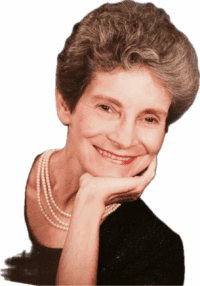
The Internal Shift of the Artist
This shift changed everything for me—not just as an artist, but as a person. I learned that mistakes are not failures; they are part of discovery. When you cannot see your work, you stop trying to control every detail and start allowing the art to evolve organically. The result is work that carries emotion rather than polish, depth rather than surface appeal.
There is profound freedom in releasing the need to please the eye. Non-visual art invites the audience to engage differently—to feel, to imagine, and to experience art in a more personal way. It reminds us that creativity is not owned by vision, and beauty is not limited to what can be seen.
Letting go of perfection gave me back my creative voice. In its place, I found authenticity, courage, and a deeper connection to my art. And that freedom, more than perfection, is what keeps me creating.
To read more about Nancy Land McCurtin and learn more about her art and books visit her website: https://nancylandmccurtin.com/
National Library Service for the Blind and Print Disabled (NLS) – Library of Congress
U.S. Department of Veterans Affairs (VA) – Blind and Low Vision Rehabilitation Services
American Foundation for the Blind (AFB)