The Discipline of the Tool: Mastering the Palette Knife as an Extension of Touch
The Discipline of the Tool: Mastering the Palette Knife as an Extension of Touch
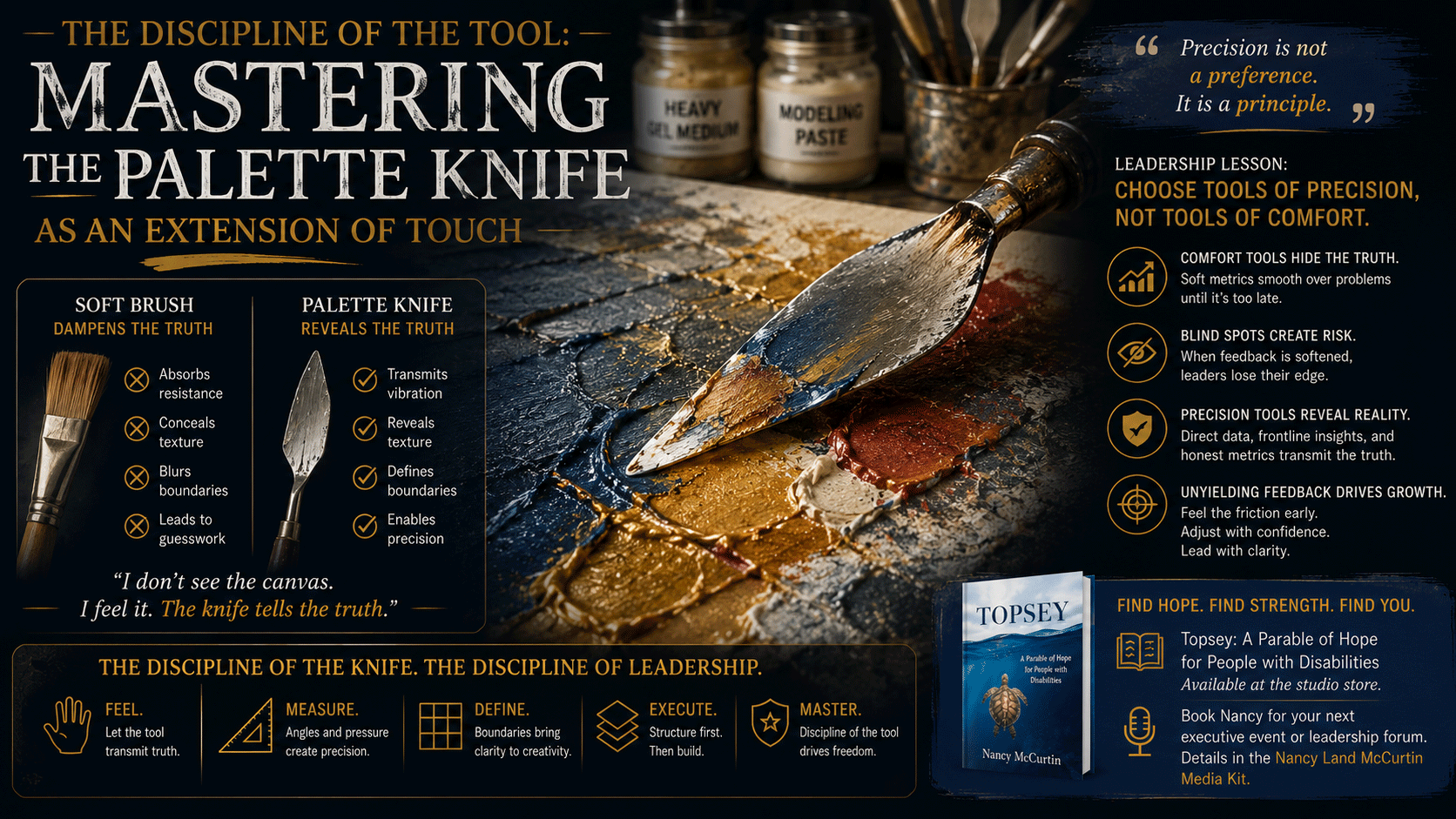
Every creative endeavor relies on an instrument of translation—a tool that bridges the gap between the internal vision of the creator and the external surface of the medium. For centuries, the soft-bristled paintbrush has reigned as the unquestioned icon of fine art, celebrated for its fluid, yielding flexibility. Sighted artists depend on this suppleness to blend tones smoothly, relying entirely on their eyes to instantly monitor how the hairs bend and where the color settles on the canvas. However, when a sudden stroke removes your physical sight, this traditional tool reveals a profound systemic flaw. In total darkness, a soft brush provides almost zero tactile pushback; it absorbs the physical resistance of the surface, leaving the non-visual artist completely untethered from the page. For many, encountering an instrument that conceals the canvas leads to deep frustration and an eventual withdrawal from the medium. True mastery, however, does not yield to a faulty mechanism. Reclaiming my authority at the easel required completely abandoning the tool of comfort in favor of an instrument of absolute precision. By mastering the rigid steel edge of the palette knife, the tool ceases to be a barrier and instead becomes a literal extension of touch, delivering instant mechanical feedback that allows texture to be applied with uncompromised accuracy.
The Physics of Mechanical Feedback
Operating an elite non-visual studio practice requires an acute understanding of physical resistance and material vibration. A paintbrush, by its very engineering, dampens friction; it is designed to glide silently and deceptively across a texture. The palette knife, conversely, is an uncompromising truth-teller. When the unyielding steel blade meets a heavy acrylic paste or coarse oil medium, every microscopic variance on the canvas is instantly conducted up through the metal and directly into the nerves of my fingers. I do not need to see the surface to understand its topography; I can feel it vibrating through the steel handle.
This physical connection demands an intense, highly disciplined calibration of the hand. The application of precise, heavy texture is entirely a function of angles and pressure. A palette knife held at a shallow, fifteen-degree angle acts as a skimming tool, smoothing out a layer of paint with geometric consistency. Tilt the blade sharply to forty-five degrees, and the unyielding edge transforms into a precision cutting instrument, scraping through wet layers to reveal the underlying tactile scaffolding. The resistance of the paint itself—the thick drag of a heavy body gel versus the slick slide of a fluid medium—tells my mind exactly how much pigment is loading onto the canvas at any given millisecond. By learning to decipher this mechanical dialect, the creative process is completely rescued from the realm of guesswork. The blade becomes a sophisticated sensory organ, mapping out depth, friction, and texture with mathematical certainty.
The Precision of the Rigid Edge
Beyond conducting vibration, the rigid geometry of the palette knife provides a structural certainty that a soft brush could never replicate. When a paintbrush carries color, the bristles splay outward unpredictably under pressure, making it incredibly difficult to define an exact margin without optical verification. The steel blade, however, maintains its precise, unvarying boundaries regardless of the force applied. This structural consistency allows for the deliberate engineering of clean, hard-edged forms entirely by touch.
This absolute predictability is vital when building a composition within a pre-mapped tactile grid. By resting the flat side of the knife blade against a raised tape boundary or a cured gesso ridge, I can execute sharp, sweeping movements with fluid confidence. The hand knows exactly where the medium will begin and where it will terminate because the tool itself cannot bend, warp, or distort the strategy. This methodical, unhurried execution demonstrates that self-sufficiency is not born from a reliance on soft, accommodating circumstances. True independence is forged when you choose to lean heavily on unyielding instruments that demand, and deliver, absolute operational clarity.
The Corporate Addiction to Tools of Comfort
The profound physical contrast between the deceptive softness of a paintbrush and the rigid precision of a palette knife offers a vital diagnostic lesson for modern executive leadership. In the corporate world, organizations frequently fall into a dangerous addiction to “tools of comfort.” When executives seek to evaluate their market position, analyze internal performance, or evaluate a new initiative, they naturally gravitate toward soft, highly compliant feedback mechanisms. They rely on idealized financial projections, sanitized middle-management summaries, and polished marketing presentations that act exactly like the soft-bristled brush—smoothing over the rough spots, blurring the structural fractures, and presenting a beautiful, frictionless picture of reality.
These comfortable metrics feel reassuring on a standard dashboard, but they possess a fatal flaw: they completely absorb and conceal the actual operational friction of the enterprise. When a shifting industry paradigm or an unexpected economic disruption occurs, leaders who rely on these cushioned reports are effectively operating blind. They cannot feel the ground shifting beneath them because their feedback mechanisms are engineered to dampen the shock. By the time the soft projections finally reveal a market decline, the organization has already drifted dangerously off-course, leaving the executive team trapped in a state of reactive damage control.
Leaning on Unyielding Feedback for Proactive Growth
True organizational agility demands that leadership intentionally select tools of precision over tools of comfort. Visionary executives must actively bypass idealized projections and instead install rigid, unyielding feedback mechanisms that conduct the raw, unfiltered truth of the market straight to the top. This means leaning heavily on direct front-line reports, unedited user data, rigorous quality-control metrics, and transparent internal audits that function exactly like the steel blade of my palette knife. These tools do not soften the blow; they transmit the exact vibration, angle, and resistance of the operational floor without filtering or compromise.
Enforcing this level of structural discipline can initially feel uncomfortable for an executive team accustomed to seamless, unbroken positivity. It requires a willingness to look directly at the friction and feel the rough textures of an enterprise. However, when an organization commits to these unyielding metrics, the threat of blind spots is completely eliminated. Leadership no longer has to guess the velocity of their market or wait for trailing indicators to reveal a crisis. They can feel the resistance immediately, allowing them to adjust their strategic pressure, re-align their operational coordinates, and execute precision pivots with the calm, steady momentum of a master practitioner. In my keynote addresses, I use the physics of the palette knife to prove that sustainable corporate growth is never built on a foundation of soft illusions. By mastering the discipline of the tool, a leader ensures their enterprise remains uncompromised, self-reliant, and perfectly positioned to convert market friction into a permanent, self-determined competitive advantage.
To delve deeper into this disciplined approach to personal transformation, risk management, and structural execution, secure your copy of the adult edition of Topsey: A Parable of Hope for People with Disabilities available at the studio store. To secure Nancy for an elite, paradigm-shifting keynote presentation on operational precision, systemic leadership, and engineering unshakeable corporate frameworks at your next executive venue, please contact her team via the official Nancy Land McCurtin Media Kit.
Nancy Land McCurtin
Blind Brush & Pen
Creativity Beyond Vision
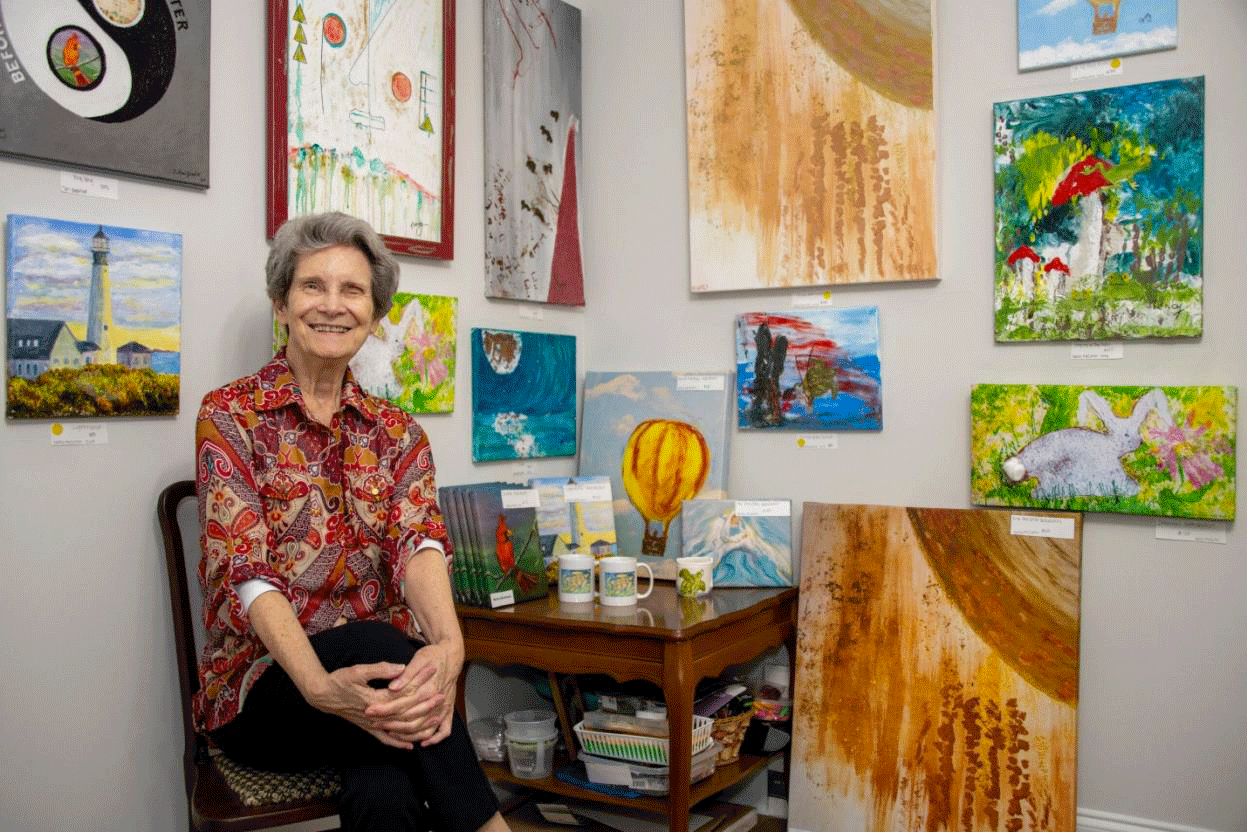
Nancy Land McCurtin is an American Abstract Expressionist, author, stroke survivor, and the founder of Blind Brush and Pen. After a stroke caused total blindness, Nancy rejected the passive narrative of coping and low expectations. Instead, she chose to weaponize the raw friction and recurring frustration of her reality, transforming intense emotional energy into a striking, sophisticated method of tactile mapping.
Operating entirely by touch, memory, and an unfiltered spiritual frequency, Nancy handles the canvas and the page with uncompromising authority. Based in Surf City, North Carolina, her mission is singular and fiercely independent: to create masterful art and powerful literature that shatters traditional boundaries and commands respect for the raw power of human resilience.
Books by Nancy | Digital Art Downloads | Featured Artwork Collection
American Foundation for the Blind | National Federation of the Blind | NC DHHS Service for the Blind