Building an Affordable Art Collection with Digital Fine Art
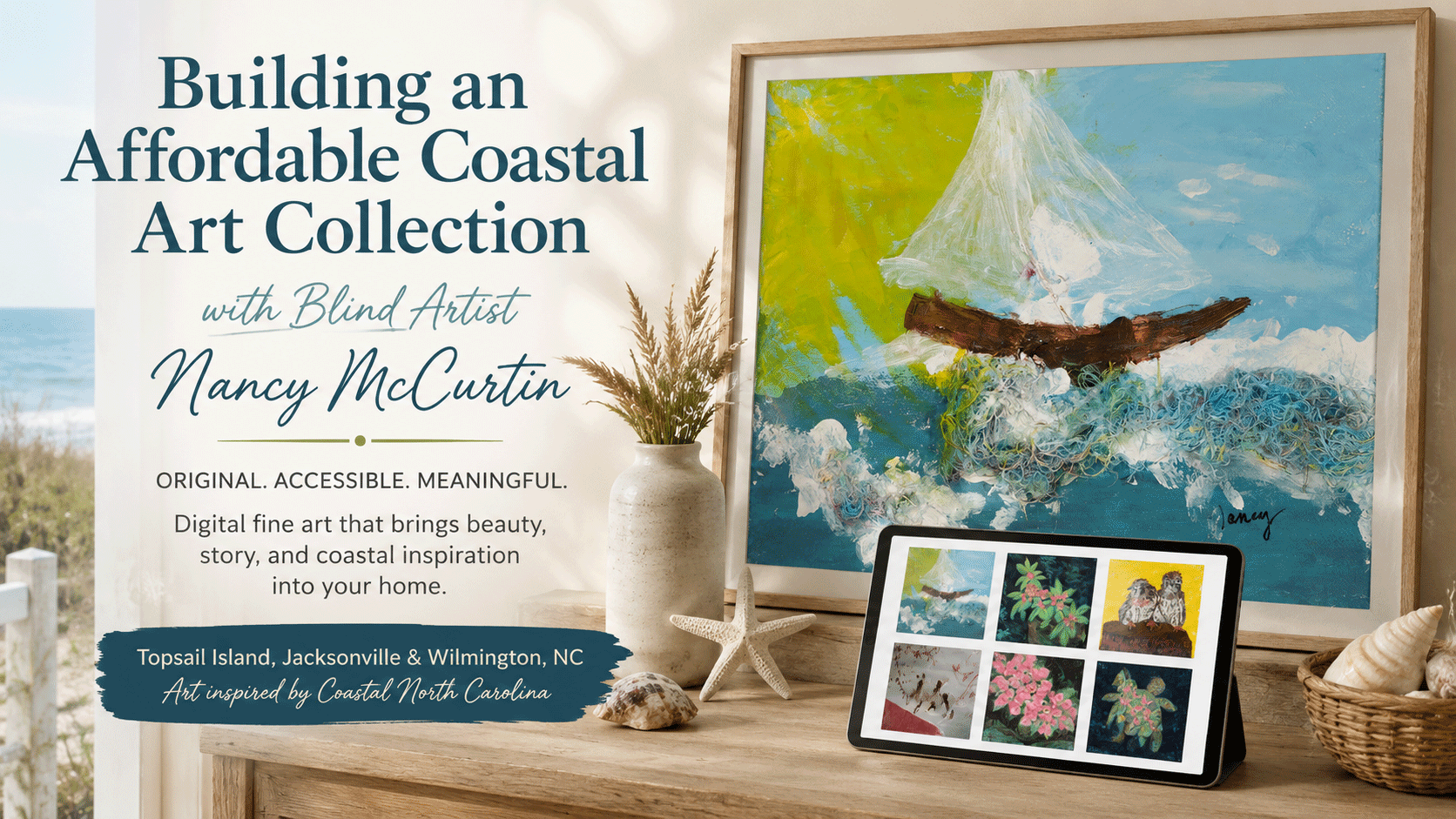
Building an Affordable Coastal Art Collection with Blind Artist Nancy McCurtin
Building a meaningful art collection does not require a gallery-sized budget, a formal education in art, or years of experience attending exhibitions. It begins with something much simpler: finding artwork that speaks to you and choosing pieces that bring personality, emotion, and character into your home.
For homeowners, vacation property owners, and interior designers throughout the Topsail Island region, digital fine art offers an especially practical way to begin. High-resolution digital artwork can be purchased affordably, downloaded immediately, and printed in the size and material that best fits a room. It gives collectors more control while making original artistic expression accessible to people who may never have considered themselves art collectors before.
The digital abstract artwork of blind artist Nancy McCurtin adds another layer to that experience. Her work is not simply decorative imagery created to match a sofa or fill an empty wall. Each piece grows from imagination, memory, texture, emotion, and a creative process shaped by a life that changed dramatically after the loss of her sight.
Buying one of Nancy’s digital fine art pieces is still, first and foremost, about choosing artwork you enjoy. But it is also an opportunity to support an independent North Carolina artist whose work reflects persistence, reinvention, and the belief that creativity does not end when circumstances change.
What Makes Digital Fine Art Collectible?
Digital fine art is professionally created artwork offered as a high-resolution downloadable file. The collector can then choose how the artwork will be printed and displayed. Depending on the image and the space, it may be reproduced on archival paper, canvas, metal, acrylic, or another professionally prepared surface.
This flexibility makes digital artwork particularly appealing to new collectors. Instead of being limited to one predetermined frame, size, or material, the buyer can make those decisions according to the room, budget, and overall design.
A digital abstract piece may become a large canvas above a sofa, a framed print in a hallway, a metal panel in a modern office, or part of a coordinated gallery wall. The same collection can be adapted for a year-round residence, a coastal retreat, a rental property, or a professional space.
That ability to personalize the final presentation is one reason digital fine art has become an attractive alternative to mass-produced wall décor. The collector receives artwork with a specific artistic origin while retaining control over how it becomes part of the home.
Affordable Art Does Not Have to Feel Generic
Many people begin decorating by purchasing inexpensive prints from large retailers. Those pieces may fill a blank wall, but they often feel temporary because they were selected mainly for color or convenience.
An art collection becomes more meaningful when each piece is chosen for a reason.
That reason may be the movement in an abstract composition, the emotional quality of the colors, the texture within the image, or the story behind the artist. A collector may simply enjoy the way a piece feels in a room, or the artwork may become connected to a particular memory, place, or stage of life.
Nancy McCurtin’s work gives collectors the opportunity to choose affordable artwork without settling for something anonymous. Her digital fine art originates from her own abstract creative process and carries the identity of a working blind artist from coastal North Carolina.
The affordability comes from the method of delivery, not from a lack of artistic value. By offering high-resolution digital downloads, Nancy can make her work available to more people while allowing each buyer to determine the final printing cost.
Why Abstract Art Works So Well in Coastal Homes
Coastal decorating is often associated with literal images of boats, lighthouses, shells, sea turtles, and shorelines. Those subjects can be beautiful, but a coastal interior does not have to rely entirely on familiar beach imagery.
Abstract art can express the feeling of the coast without depicting it directly.
Movement may suggest shifting water. Layers of color may recall changing skies. Rough textures may feel like dunes, weathered wood, sea foam, marsh grass, or storm clouds. A piece can feel distinctly coastal while leaving room for the viewer’s own interpretation.
This makes abstract fine art especially useful in homes around Topsail Island, Surf City, Topsail Beach, North Topsail Beach, Sneads Ferry, and Hampstead. It can complement a coastal setting without making every room look themed or predictable.
For collectors, abstract art also tends to remain interesting over time. A literal image is often understood immediately. An abstract work may reveal something different depending on the light, the room, the viewer’s mood, or the surrounding furnishings.
Nancy McCurtin’s Perspective as a Blind Artist
Nancy McCurtin’s blindness is part of her story, but it is not the only reason to engage with her work. The art must still stand on its own. It must create interest, hold attention, and contribute something meaningful to the space where it is displayed.
What her blindness does provide is a distinctive creative perspective.
Nancy does not approach abstract art through conventional visual observation alone. Her work is shaped by remembered color, emotional association, touch, texture, imagination, and the descriptions of trusted people around her. She creates from an internal sense of movement and form rather than attempting to reproduce exactly what is in front of her.
That process gives the work a personal foundation without requiring the viewer to treat it as a symbol of disability. Collectors are not being asked to purchase art out of sympathy. They are being invited to support an artist whose circumstances forced her to develop a different relationship with creativity.
The result is artwork tied to a real person, a real process, and a continuing body of work.
Start with One Piece You Genuinely Enjoy
A collection does not need to begin with a plan for an entire house. It can begin with one piece.
Choose artwork that immediately holds your attention. Do not worry first about whether it matches every color in the room. Consider whether you would still enjoy seeing it after the room is repainted, the furniture is changed, or the artwork is moved somewhere else.
A strong first piece often becomes the foundation for future choices. It may establish a preferred color range, emotional tone, or style. Later purchases can complement it without needing to match exactly.
For example, a collector may begin with a bold Nancy McCurtin abstract in a living room and later add smaller, quieter works in a hallway or guest bedroom. Another collector may choose several pieces with similar movement but different colors to create continuity throughout a coastal home.
Choose the Right Size for the Space
One of the greatest advantages of digital fine art is the ability to select a print size that fits the room.
A common mistake is choosing artwork that is too small. A single small print above a wide sofa, bed, or fireplace can appear disconnected from the furniture below it. In those situations, a larger canvas or a coordinated group of prints often creates a stronger result.
Before printing, measure the wall and consider the surrounding furniture. A statement piece should feel substantial without overwhelming the room. Smaller pieces work well in entryways, reading areas, stairways, bathrooms, offices, and gallery walls.
Digital files also make it easier to test possibilities. A collector can use painter’s tape or paper templates to outline different print sizes on the wall before placing an order with a printer.
Consider Canvas, Paper, Metal, or Acrylic
The printing surface can significantly change the character of an artwork.
Canvas prints provide a familiar fine art presentation and work especially well with abstract compositions. They usually require no traditional frame and can create a softer, more textured appearance.
Archival paper prints offer flexibility in framing. A mat and frame can make the artwork feel formal, contemporary, rustic, or coastal depending on the materials chosen.
Metal prints often produce crisp detail and strong color. They can be an effective choice for modern homes, offices, rental properties, and spaces where durability is important.
Acrylic prints can create depth and a polished appearance, making them suitable for contemporary interiors and dramatic statement walls.
The best choice depends on the artwork, the room, and the collector’s personal taste. Digital fine art allows that decision to remain with the buyer rather than being predetermined by the artist or retailer.
Build a Coastal Collection Gradually
An affordable art collection is often more satisfying when it grows over time.
Instead of buying several unrelated pieces simply to finish a room, allow the collection to develop naturally. Add artwork when a piece creates a genuine response or when a particular space needs something more personal.
Over time, the collection may begin to reflect recurring interests. One collector may gravitate toward energetic color. Another may prefer softer compositions and subtle movement. Some may choose artwork that feels connected to Topsail Island, even when the imagery is abstract rather than literal.
A gradual approach also makes the cost manageable. Digital downloads can be purchased individually, and printing can occur as budget and space allow.
Digital Fine Art for Topsail Island Vacation Properties
Vacation homes and rental properties throughout the Topsail Island region present a unique decorating challenge. The space should feel welcoming and coastal, but it also needs to remain practical, durable, and distinctive.
Digital abstract art can help property owners create a more polished environment without relying on generic beach décor found in countless rentals.
A coordinated group of Nancy McCurtin’s digital pieces can be printed in consistent formats and used throughout bedrooms, hallways, living spaces, and entry areas. The artwork can support the atmosphere of the property while giving it an identity that guests may remember.
Because the original file is digital, a damaged print can also be replaced more easily than a one-of-a-kind physical work. That can be especially valuable in a frequently occupied rental property.
Supporting a Regional Artist
Purchasing from a regional artist helps keep creative work connected to the community where it was developed.
Nancy McCurtin’s story is rooted in coastal North Carolina, with connections to the Topsail Island region, Jacksonville, and Wilmington. These areas provide more than geographic keywords. They represent the communities, landscapes, relationships, events, and audiences that surround her work.
Collectors from Topsail Island may feel a direct connection to that regional identity. Buyers from Jacksonville or Wilmington can also recognize Nancy as an artist working within the broader southeastern North Carolina creative community.
Supporting a regional artist does not require purchasing the most expensive work available. A digital download, a printed canvas, a phone wallpaper, or a book can all become part of an ongoing relationship between artist and audience.
More Than Decoration
Art changes the way a room feels, but its value often extends beyond decoration.
It can create conversation. It can remind someone of a place or experience. It can make a new house feel settled or give an older room a new identity. It can also connect the collector with the person who created it.
That connection is an important part of Nancy McCurtin’s digital fine art.
The collector is not buying a random image from an anonymous catalog. The artwork comes from a blind abstract artist who continued creating after losing her sight and who built a new artistic process around memory, texture, intuition, and imagination.
That story does not need to dominate the room or overshadow the artwork. It simply gives the piece a deeper foundation.
Building Your Own Nancy McCurtin Art Collection
An affordable collection can begin with a single download and grow into several printed works displayed throughout a home or business.
Start by exploring Nancy McCurtin’s available digital fine art and choosing the piece that creates the strongest personal response. Consider where it might be displayed, which printing material would suit it best, and whether it could eventually become the starting point for a broader collection.
For homeowners and property owners throughout Topsail Island, the result can be more than attractive coastal décor. It can become a collection of original abstract artwork tied to a North Carolina artist, a personal journey, and a creative story that continues to evolve.
Building an art collection should be enjoyable, personal, and financially realistic. Digital fine art makes that possible. Nancy McCurtin’s work adds something else: the opportunity to collect art with a recognizable voice, a regional connection, and a story worth supporting.