Sed porttitor lectus nibh. Pellentesque in ipsum id orci porta dapibus. Proin eget tortor risus. Vivamus magna justo, lacinia eget consectetur sed, convallis at tellus.
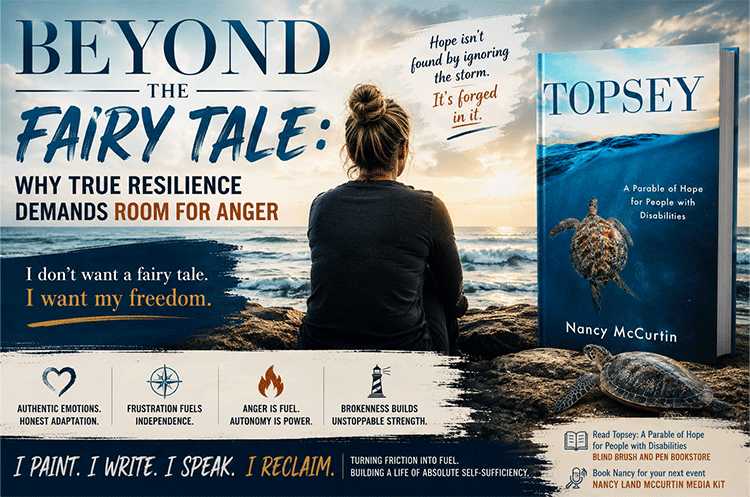
Society loves the myth of the perfectly smiling disabled person, but authentic adaptation requires a deeper truth. Learn why true resilience demands room for a quiet, focused frustration, and explore how Nancy Land McCurtin's adult edition of Topsey serves as a profound parable of hope and self-sufficiency.
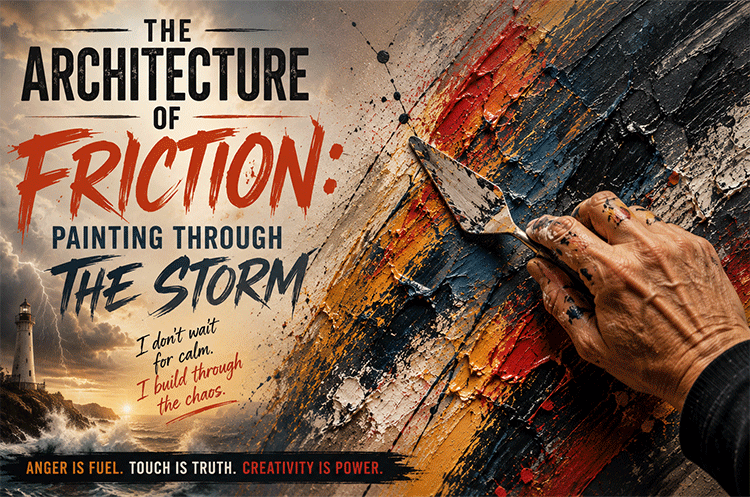
Deep frustrations are not roadblocks to creativity, but the actual scaffolding of Nancy's abstract expressionism. Explore how the Blind Brush and Pen process transforms intense emotional friction into the structural, tactile energy found in pieces like Sailing and Sailing Partner.
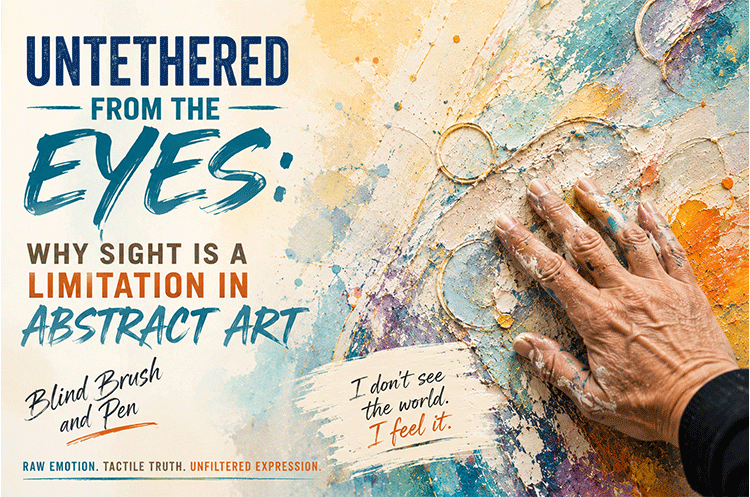
Sighted artists are constantly distracted by visual noise and literal representations. Discover why abstract expressionist Nancy Land McCurtin views her blindness as a liberation, using a gritty tactile mapping process to prove that sight is a limitation in abstract art.
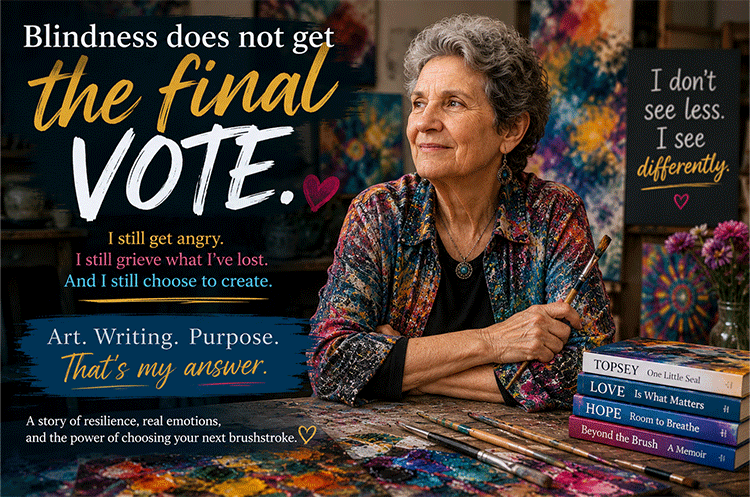
A sudden stroke might change the rules of your life, but it never dictates the final score. Discover how blind abstract expressionist and author Nancy Land McCurtin rejects the patronizing expectations of caregivers, handles recurring anger, and proves that blindness does not get the final vote.
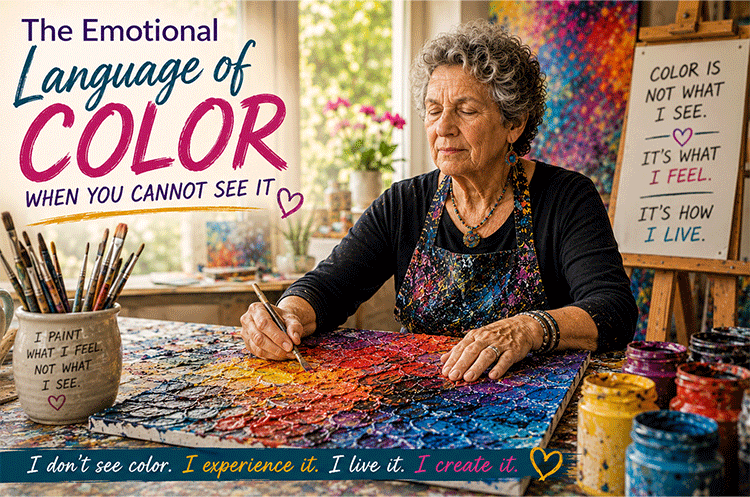
Discovering the emotional language of color when you cannot see it requires shifting from optical observation to raw, sensory friction. Learn how blind artist Nancy Land McCurtin rejects pity and translates memory, texture, and recurring anger into pieces like Morning Swim.
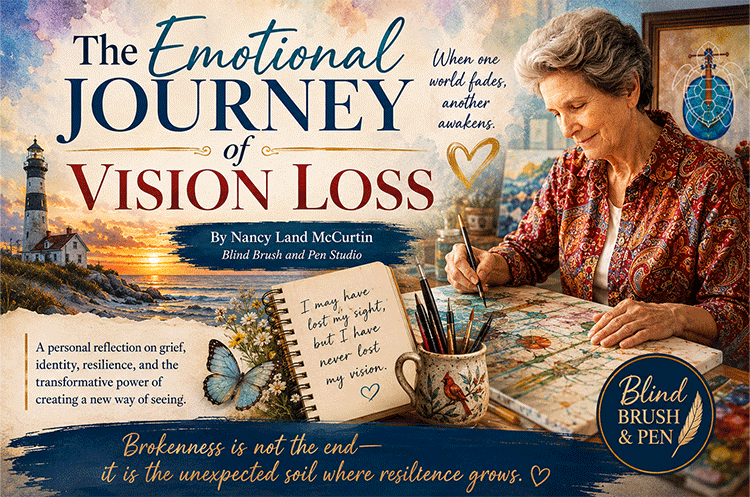
Navigating the emotional journey of vision loss requires confronting an intense landscape of grief, identity shifts, and eventual spiritual awakening. Discover how art and writing can become a canvas for healing and a testament to resilience.
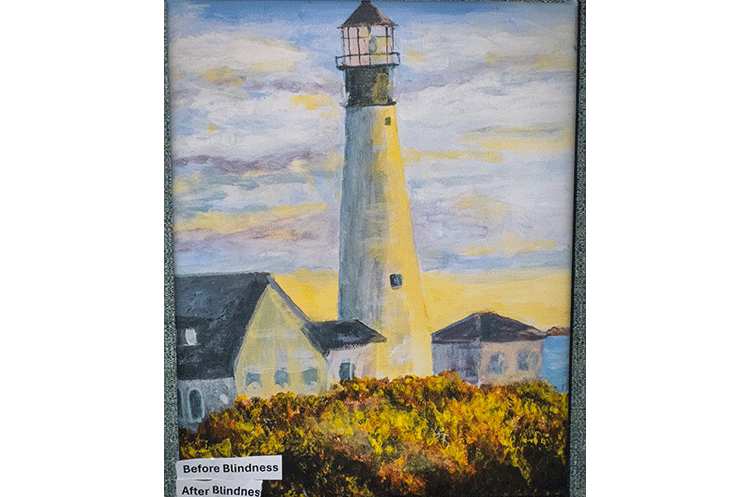
Blind artist and author Nancy Land McCurtin shares how creativity transformed her understanding of achievement, purpose, and personal fulfillment after vision loss.
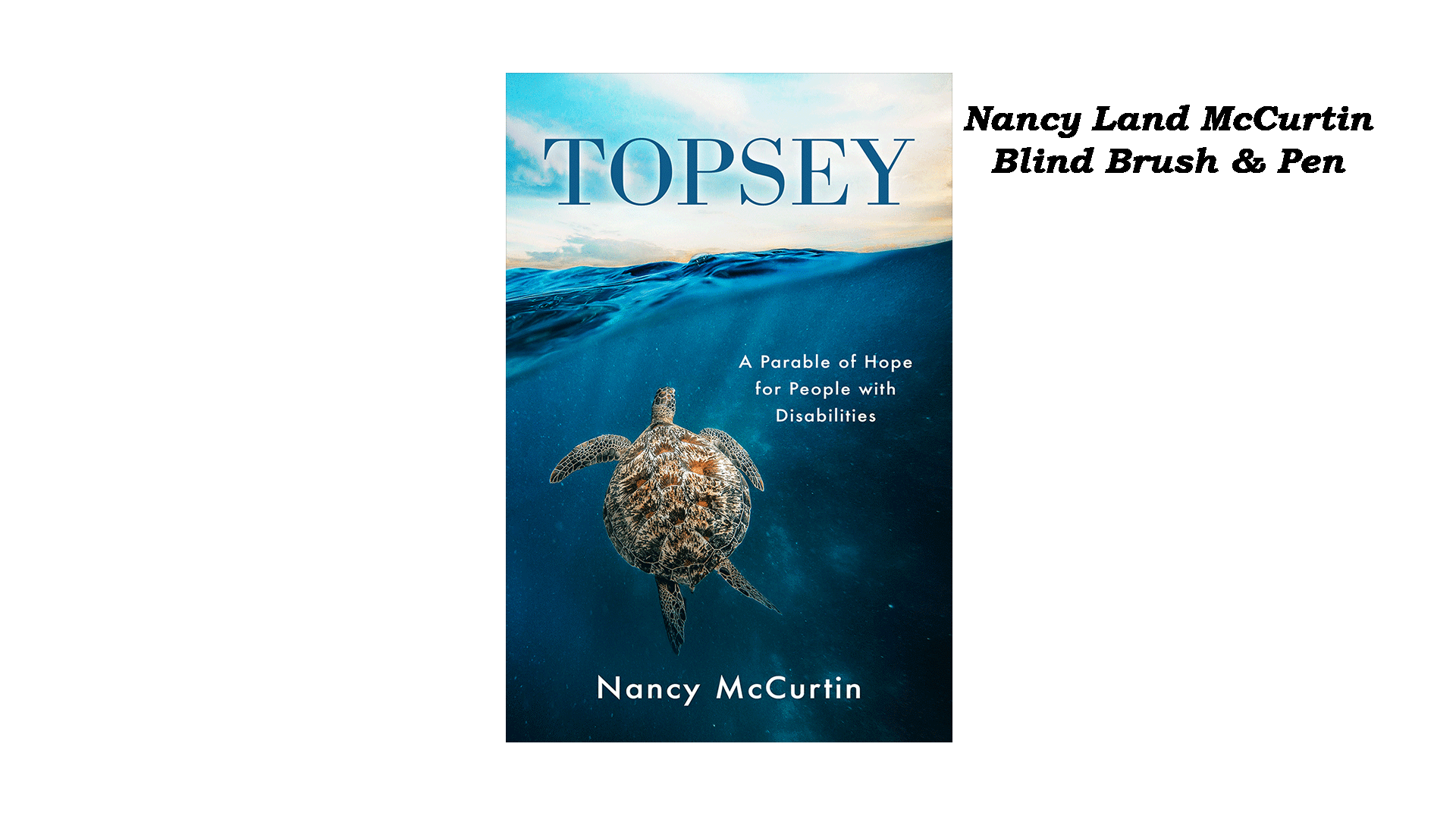
Discover how Nancy Land McCurtin found a new, witty voice as a blind author after losing her sight.

Discover how Nancy Land McCurtin uses wit and whimsy to redefine life after vision loss through her vibrant art and storytelling at Blind Brush & Pen.
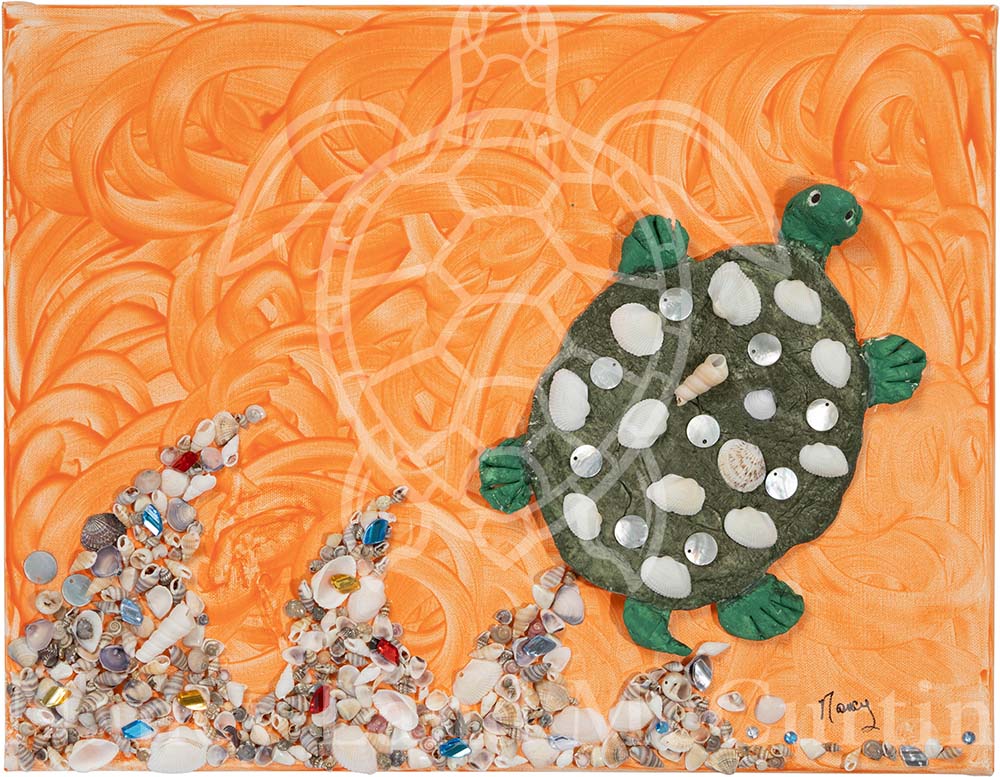
In a world obsessed with visual perfection, we often forget that the most powerful art is felt. Nancy reflects on why true creativity exists in the space beyond what the eye can see.