Beyond the Fairy Tale: Why True Resilience Demands Room for Anger
Beyond the Fairy Tale: Why True Resilience Demands Room for Anger
The cultural narrative surrounding disability is too often wrapped in an artificial, neatly tailored fairy tale. Society has a deeply ingrained comfort level with the image of the perfectly adjusted, perpetually smiling individual who faces life-altering medical events with seamless, unbroken cheer. Caregivers, onlookers, and well-meaning observers frequently project this expectation onto stroke survivors and those navigating sudden vision loss, gently encouraging them to remain positive at all costs. While optimism has its place, this forced, superficial pleasantry can inadvertently sanitize the real, complex human experience of trauma. True adaptation is not a magical, effortless transition. It is a quiet, deliberate negotiation with a completely altered reality. To pretend that sudden blindness does not bring a profound, recurring sense of unfairness is to deny the depth of the survival itself. Authentic resilience demands room for a quiet, focused anger—not as a destructive force, but as an essential element of the mental scaffolding required to build absolute, fierce self-sufficiency.
Dismantling the Inspiration Myth
When my stroke took my vision and altered the trajectory of my life, I quickly realized that the world prefers its inspiration stories to be soft and unchallenging. There is a systemic pressure to become an involuntary symbol of quiet compliance, a gentle reminder to others that things could always be worse. But true human growth does not occur in a vacuum of forced smiles. When you are suddenly forced to re-learn how to navigate your home, your studio, and your daily life entirely by touch, it is completely natural to experience moments of profound frustration. Acknowledging the inherent unfairness of a stroke is not a sign of defeat; it is the first, necessary step toward reclaiming your personal autonomy. If we do not allow ourselves the space to feel the genuine weight of our circumstances, we cannot map an honest path forward.
This persistent, quiet fire is not about throwing tantrums or dwelling in bitter resentment. Instead, it is about recognizing that your frustration is actually a deeply valid, generative indicator of your desire to remain independent. When society tells you to simply accept your new limitations with a gentle nod, a quiet, internal resistance becomes your most reliable tool for self-preservation. It is the fuel that prevents you from settling into a state of passive dependency. By honoring the full spectrum of our emotions—including the complicated, uncomfortable ones—we strip away the patronizing fairy tales and replace them with a dignified, clear-eyed reality that commands genuine respect rather than well-meaning pity.
Topsey: Evolution of a Modern Parable
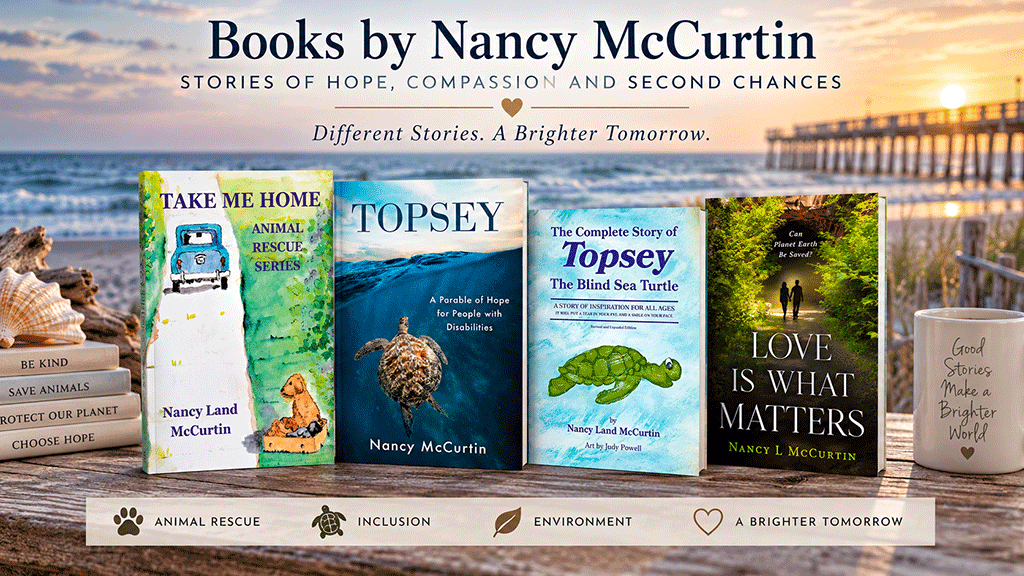
This philosophical boundary between forced positivity and raw, honest adaptation is the exact foundation upon which my literary work is built. When I first introduced the character of Topsey, the narrative naturally took the shape of an illustrated children’s book. It was an unintended but beautiful introduction to a character navigating a changing world. However, as my own journey with non-visual painting deepened, I realized that the core message of Topsey possessed a far more mature, profound resonance that extended well beyond the boundaries of a children’s story. This realization drove the creation and release of the second iteration of Topsey.
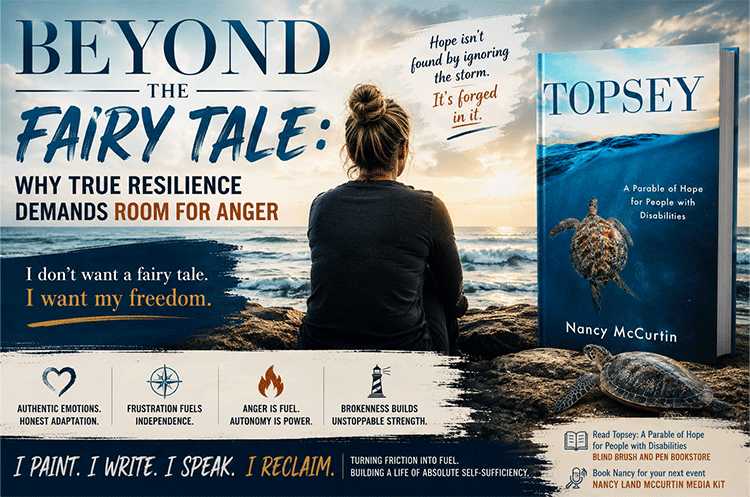
Stripped of its original illustrations and presented under a completely redesigned, sophisticated jacket cover, this second edition has evolved into something entirely new: a definitive parable of hope for people with disabilities. Written for an adult audience, this version moves past the simple, sanitized lessons of typical adversity stories. It dives straight into the quiet, internal architecture of resilience. Topsey serves as a mirror for anyone who has had their independence challenged by circumstance, illustrating that hope is not found by pretending the storm isn’t real. Hope is forged when you look directly at the rough seas, acknowledge the sheer difficulty of the crossing, and choose to steady your hand on the helm anyway. It bridges the gap between the initial shock of trauma and the eventual, hard-won realization of absolute self-sufficiency.
Harnessing the Quiet Fire for Executive Leadership
The lessons learned through this evolution extend far beyond the canvas or the pages of a book; they speak directly to the core principles of high-level organizational leadership and systemic problem-solving. In the corporate and institutional world, leaders are frequently taught to suppress friction, minimize internal conflicts, and maintain an artificial veneer of absolute control during a crisis. This is the executive equivalent of the inspiration myth. When a business or an individual encounters a catastrophic disruption, trying to manage it through forced optimism invariably leads to stagnation and a lack of authentic engagement.
True innovation requires us to look at the friction, understand its origins, and intentionally transform that underlying frustration into a structural catalyst for strategic pivot. When I stand on a stage to deliver a keynote address, my goal is to completely redefine how audiences perceive adversity. I invite corporate leaders, healthcare professionals, and advocacy groups to look past the superficial surface of resilience. By sharing the unvarnished realities of navigating a non-visual creative empire, I demonstrate how a measured, deeply disciplined acknowledgment of difficulty can be weaponized to dismantle low expectations, drive authentic innovation, and cultivate an organizational culture rooted in genuine, unshakeable autonomy.
The Foundation of Ultimate Autonomy
Ultimately, moving beyond the fairy tale means accepting that our scars and our complex emotions are not defects to be hidden away for the comfort of others. They are the very materials from which our authority is constructed. My soft-spoken demeanor should never be mistaken for a lack of absolute resolve. The quietest rooms often house the most intense internal fires. By allowing room for a balanced, focused frustration, we reclaim our right to be viewed as whole, complex human beings rather than flat, one-dimensional symbols of inspiration.
For fellow creators, stroke survivors, and independent minds seeking to redefine their boundaries, remember that your worth is not measured by how politely you accept an unfair hand. Your worth is proven by your willingness to navigate through the storm entirely on your own terms. Brokenness is never an ending point; it is merely the gritty, fiercely authentic foundation where an unstoppable inner strength and a masterful new path are quietly, beautifully built.
To immerse yourself in this profound, adult journey of adaptation, secure your copy of the newly released, unillustrated edition of Topsey: A Parable of Hope for People with Disabilities at the Blind Brush and Pen Bookstore. For organizations, universities, or corporate events looking to book Nancy for an elite, paradigm-shifting keynote on leadership, authentic resilience, and turning systemic friction into fuel, please review availability and presentation topics via the official Nancy Land McCurtin Media Kit.
Nancy Land McCurtin
Blind Brush & Pen
Creativity Beyond Vision
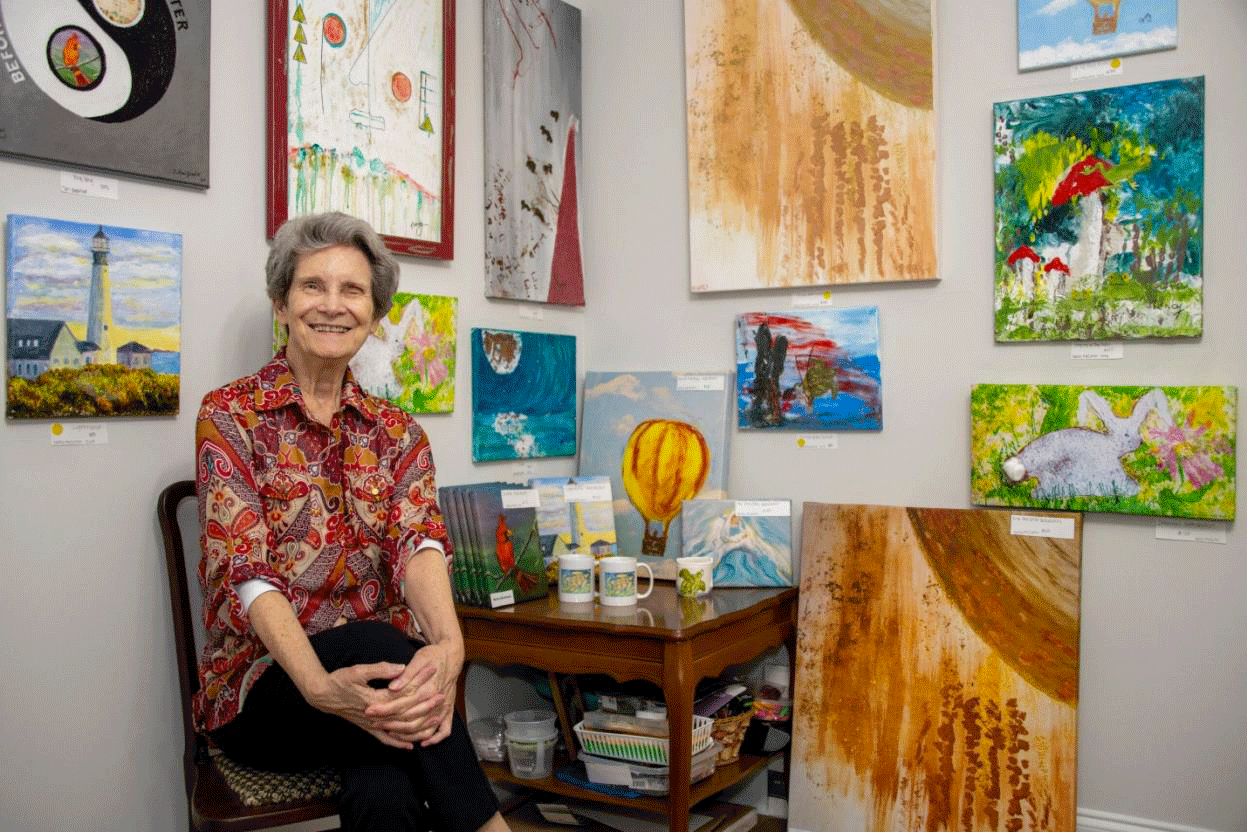
Nancy Land McCurtin is an American Abstract Expressionist, author, stroke survivor, and the founder of Blind Brush and Pen. After a stroke caused total blindness, Nancy rejected the passive narrative of coping and low expectations. Instead, she chose to weaponize the raw friction and recurring frustration of her reality, transforming intense emotional energy into a striking, sophisticated method of tactile mapping.
Operating entirely by touch, memory, and an unfiltered spiritual frequency, Nancy handles the canvas and the page with uncompromising authority. Based in Surf City, North Carolina, her mission is singular and fiercely independent: to create masterful art and powerful literature that shatters traditional boundaries and commands respect for the raw power of human resilience.
Books by Nancy | Digital Art Downloads | Featured Artwork Collection
American Foundation for the Blind | National Federation of the Blind | NC DHHS Service for the Blind