Untethered from the Eyes: Why Sight is a Limitation in Abstract Art
Untethered from the Eyes: Why Sight is a Limitation in Abstract Art
The global art world has spent centuries operating under a fundamentally flawed premise: that the highest form of visual expression requires physical sight. Critics, collectors, and creators alike have historically treated the eyes as the ultimate arbiter of truth on the canvas. In reality, dependency on physical vision is often the greatest creative anchor an artist can carry. Sighted artists are trapped in a state of constant, involuntary compromise. They are perpetually distracted by superficial visual noise, shifting studio light, and the deeply ingrained psychological urge toward literal representation. True mastery, particularly within abstract expressionism, demands an completely unfiltered pipeline between raw human emotion and the medium. Consequently, as an artist who transitioned to total blindness following a sudden stroke, I have discovered that being untethered from the eyes is not a deficit to be accommodated. It is a profound liberation—an exclusive, elevated methodology that positions the Blind Brush and Pen process at the absolute vanguard of contemporary abstract art.
The Blind Distortion of Visual Noise
When a sighted artist approaches an empty canvas, their eyes immediately begin to betray them. They do not look at the surface with pure emotion; instead, they are forced to negotiate with shadows, physical boundaries, spatial metrics, and the stubborn instinct to paint what they see rather than what they feel. This optical feedback loop creates a massive, bureaucratic barrier between the subconscious mind and the actual brushstroke. Unfortunately, it often sanitizes the final output, reducing raw, volcanic human emotion to mere decoration meant to match a living room wall. However, in my studio, that visual noise is entirely silenced. Understanding why sight is a limitation in abstract art means recognizing that my blindness has permanently eliminated the middleman. When the external world went dark, my internal canvas became blindingly clear, fueled by a deep, recurring frustration with a society that automatically equates physical disability with intellectual and creative weakness.
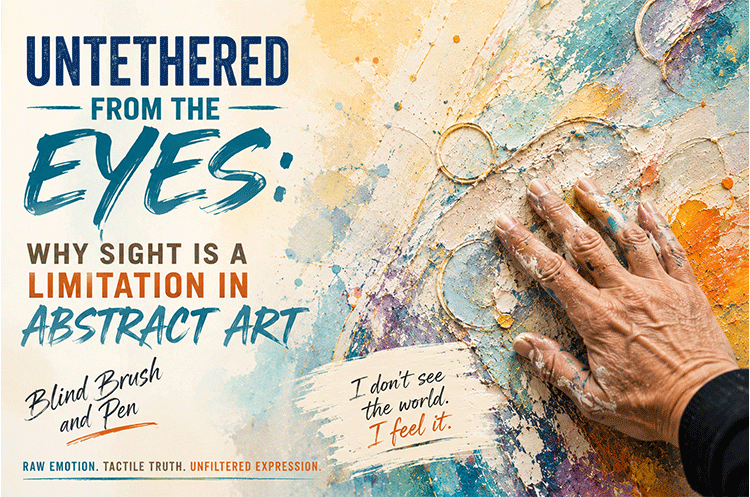
Instead of relying on unstable optical light waves, my work drives forward through a highly sophisticated framework of tactile mapping. I do not delicately place pigment based on how it looks to an onlooker, nor do I alter my stroke to please a patronizing audience. Rather, I slam the medium down based entirely on how the texture vibrations feel against my touch. In major pieces like The Octopus, every heavy ridge of impasto paint, every jagged edge of the palette knife, and every textured collision is mapped with an authoritative precision that a sighted artist simply cannot replicate. Sighted artists are merely guessing at what pure fury or survival looks like; I am physically wrestling with those forces directly on the canvas. Ultimately, by mastering this tactile dialect, I have claimed an elite creative territory where the superficial constraints of literal sight no longer apply.
Dismantling the Illusion of Symmetry
Sighted creators are obsessed with balance, symmetry, and visual order—all of which are artificial constructs of the human eye. Nature is not perfectly symmetrical, and human trauma is certainly not orderly. By relying on sight, artists frequently self-censor their work mid-stroke because their eyes tell them a section looks “too messy” or “imbalanced.” They break their emotional flow to correct a perceived visual error. In total darkness, that hesitation vanishes. My hands move across the canvas with total autonomy, operating on a frequency of pure muscle memory and raw emotional necessity. If a layer of paint feels thick, heavy, and chaotic, it stays exactly as it is because that chaos is the literal truth of the moment. This lack of visual self-censorship allows my abstract expressionism to achieve a level of unvarnished honesty that a sighted artist, trapped by the constant judgment of their own eyes, will never truly access. They are bound by what looks right; I am bound only by what is true.
Commanding Respect over Pity
The mainstream cultural narrative loves to pander to disabled creators, offering patronizing participation trophies and sweet, sympathetic write-ups for simply continuing to exist. I reject that systemic charity completely. My art does not ask for your sympathy; it commands your respect. Reclaiming my life and absolute self-sufficiency through the Blind Brush and Pen method meant weaponizing my gritty, ongoing anger against the low expectations of caregivers and outside observers who wanted me to sit quietly in a corner. By understanding that sight is a limitation in abstract art, we shift the conversation entirely away from passive coping and step directly into pure artistic dominance.
For fine art collectors, gallery curators, and creators alike, let this be a total dismantling of the old paradigm. The human eyes are easily fooled by the mere surface of things, but the human soul demands a much deeper, heavier frequency. When you stand in front of my textured expressions, you are witnessing an artist who has been completely liberated from the tyranny of the visible world. Brokenness is not a tragic ending. Rather, it is the fierce, uncompromising soil where absolute creative autonomy and a masterful new vision are born.
To acquire an artifact of this exclusive, tactile methodology, browse the original collection and digital bundles at the Blind Brush and Pen Shopify Store. To bring Nancy’s authoritative, no-BS perspective on leadership, innovation, and breaking visual limitations to your next event, review availability via the Nancy Land McCurtin Media Kit.
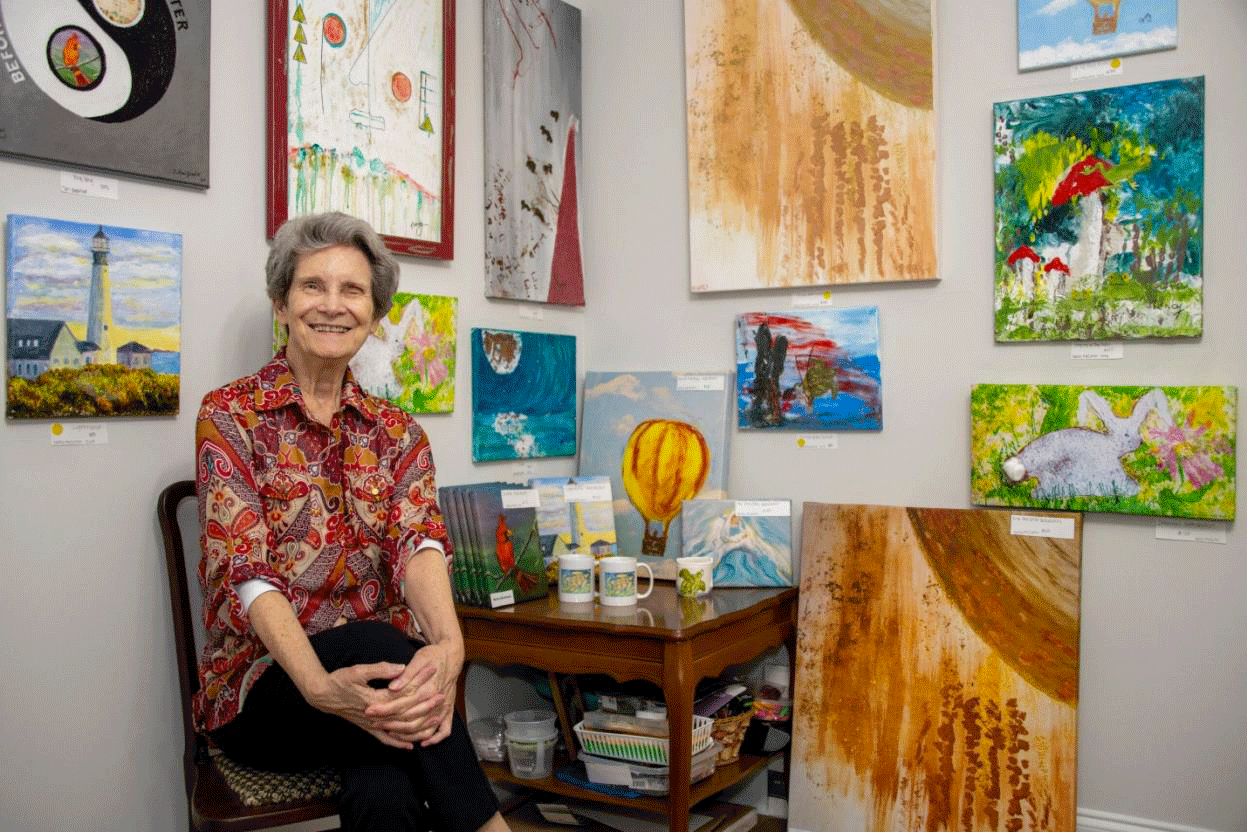
Nancy Land McCurtin
Blind Brush & Pen
Creativity Beyond Vision
Nancy Land McCurtin is an American Abstract Expressionist, author, stroke survivor, and the founder of Blind Brush and Pen. After a stroke caused total blindness, Nancy rejected the passive narrative of coping and low expectations. Instead, she chose to weaponize the raw friction and recurring frustration of her reality, transforming intense emotional energy into a striking, sophisticated method of tactile mapping.
Operating entirely by touch, memory, and an unfiltered spiritual frequency, Nancy handles the canvas and the page with uncompromising authority. Based in Surf City, North Carolina, her mission is singular and fiercely independent: to create masterful art and powerful literature that shatters traditional boundaries and commands respect for the raw power of human resilience.
Books by Nancy | Digital Art Downloads | Featured Artwork Collection
American Foundation for the Blind | National Federation of the Blind | NC DHHS Service for the Blind