The Symphony of Texture: How Touch Replaces the Kitchen Timer
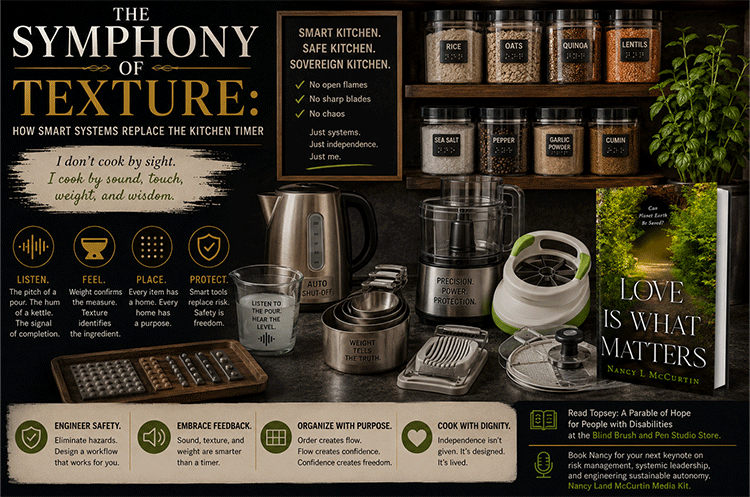
The Symphony of Texture: How Smart Systems Replace the Kitchen Timer
The domestic kitchen is traditionally treated as a heavily visual environment, dependent on flashing digital screens, glowing burners, and the precise alignment of sharp blades. When a stroke abruptly removes your physical sight, the immediate cultural assumption is that this space must be surrendered entirely. Well-meaning observers and caregivers often step in to take total control of meal preparation, viewing the kitchen as a landscape of unacceptable hazards. While certain risks are undeniable, true autonomy is not achieved by completely abandoning a domain, nor is it achieved through reckless bravado.
True intelligence lies in calculated risk mitigation. Reclaiming independence in the kitchen does not mean stubbornly trying to use dangerous tools like open-flame stoves or heavy chef knives just to prove a point. Rather, it requires engineering a smart, practical workflow tailored to a non-visual reality. By replacing visual timers and hazardous methods with a disciplined system of tactile mapping, auditory feedback, and specialized prep tools, the kitchen transforms into a safe, highly predictable environment managed with absolute personal sovereignty.
The Auditory and Weight Mechanics of Fluid Assembly
Without the ability to visually monitor a boiling pot or read a measuring line, the process of assembling ingredients relies heavily on acoustic feedback and gravitational weight. One of the most elegant, practical skills developed in a non-visual kitchen is the ability to gauge volume entirely by sound. Sighted individuals watch a liquid rise to the brim of a vessel; in total darkness, a person listens to the changing pitch of the pour. As liquid fills a container, the hollow resonance steadily sharpens, rising in frequency as the air space decreases. Tuning into this auditory progression allows for the safe, precise pouring of liquids without the need for visual indicators or messy overflows.
This auditory mindfulness transforms the simple act of food assembly into a calm, rhythmic discipline. Gravitational weight provides a secondary layer of confirmation. When mixing ingredients, the hand learns to register the shifting counter-balance of a bowl as substances are added. By pairing these natural acoustic and sensory cues with standard, safe kitchen appliances—such as electric kettles with automatic shut-off switches or precisely timed microwaves—the need for an open stove burner is entirely eliminated. Safety and independence coexist perfectly when a workflow is built around tools that minimize catastrophic variables while maximizing predictable results.
Tactile Calibration and the Power of Placement
The true engine of a non-visual kitchen is an uncompromising commitment to spatial organization. For a self-sufficient household to operate smoothly, the placement of every container, utensil, and ingredient must become absolute. Sighted cooks often tolerate a chaotic countertop because their eyes can scan a surface to find a misplaced item. In a non-visual environment, an object left even slightly out of its designated coordinate is effectively lost. Meticulous order is the literal foundation of personal safety. Every item in my kitchen occupies an unvarying position on an internal grid.
This strict spatial discipline is achieved through tactile calibration. Spices, grains, and pantry staples are organized not by printed labels, but by a rigorous structural arrangement based on texture, vessel shape, and specific shelf placement. The tactile difference between the fine, powdery consistency of a ground spice and the rough, flaky friction of sea salt is instantly recognizable to a trained touch. Standard glass measuring cups are replaced by a dedicated set of nesting metal scoops, where each specific volume represents a distinct weight and structural shape.
When the environment is organized with this level of precision, the act of preparation moves forward seamlessly. The hand reaches out, identifies the proper vessel by its exact geometric location, and executes the task with fluid, unhurried authority.
Intelligent Adaptation: Replacing the Blade
Perhaps the most practical aspect of navigating the kitchen safely without sight is knowing when to bypass traditional tools entirely. Society frequently assumes that food preparation requires masterly knife skills, but a pragmatic approach to independence looks for a safer, more efficient path to the same destination. To avoid unnecessary hazards, traditional chef knives can be permanently retired in favor of specialized, structurally bounded prep tools. Devices engineered with integrated safety guards—such as apple wedgers, egg slicers, covered mandolines, and electric food processors—completely isolate the fingers from any exposed edge.
Utilizing these adapted tools turns food preparation into a mechanical, highly controlled sequence. An ingredient is placed within a fixed guide, a protected lever or press is engaged, and the task is completed with absolute geometric uniformity and zero physical risk. This is not a compromise on capability; it is an evolution of technique. It demonstrates that authentic resilience is deeply rooted in common sense. By intentionally engineering danger out of the equation, an individual protects their physical well-being while fiercely maintaining their right to manage their own home entirely on their own terms.
Risk Mitigation as a Masterclass in Leadership
The calculated workflow required to command a kitchen safely without sight offers an invaluable framework for modern organizational leadership. In the corporate world, executives are frequently conditioned to believe that managing a crisis requires high-stakes, aggressive bravado—facing every danger head-on to prove their strength. This is the organizational equivalent of playing with fire. When a company encounters a major market disruption or operational vulnerability, reckless risk-taking rarely leads to sustainable recovery. More often, it leads straight to catastrophic failure.
True corporate resilience demands a pragmatic, clear-eyed focus on risk mitigation and workflow engineering. It requires leaders to look objectively at their operational environment, identify the variables that present unnecessary danger, and intentionally design systems that bypass those hazards entirely. Sustainable innovation is built on predictability, structured order, and the smart deployment of defensive strategies.
When I speak to executive audiences, I use the practical mechanics of my kitchen to illustrate that true power does not lie in surviving preventable emergencies. True power lies in the quiet, methodical intelligence that structures an environment so beautifully that the emergency never happens in the first place.
To explore this deeply practical approach to personal transformation and uncompromised autonomy, secure your copy of the adult edition of Topsey: A Parable of Hope for People with Disabilities at the studio store. For corporate organizations, healthcare forums, or universities looking to book Nancy for a powerful, paradigm-shifting keynote on risk management, systemic leadership, and engineering sustainable autonomy, please review presentation topics via the official Nancy Land McCurtin Media Kit.
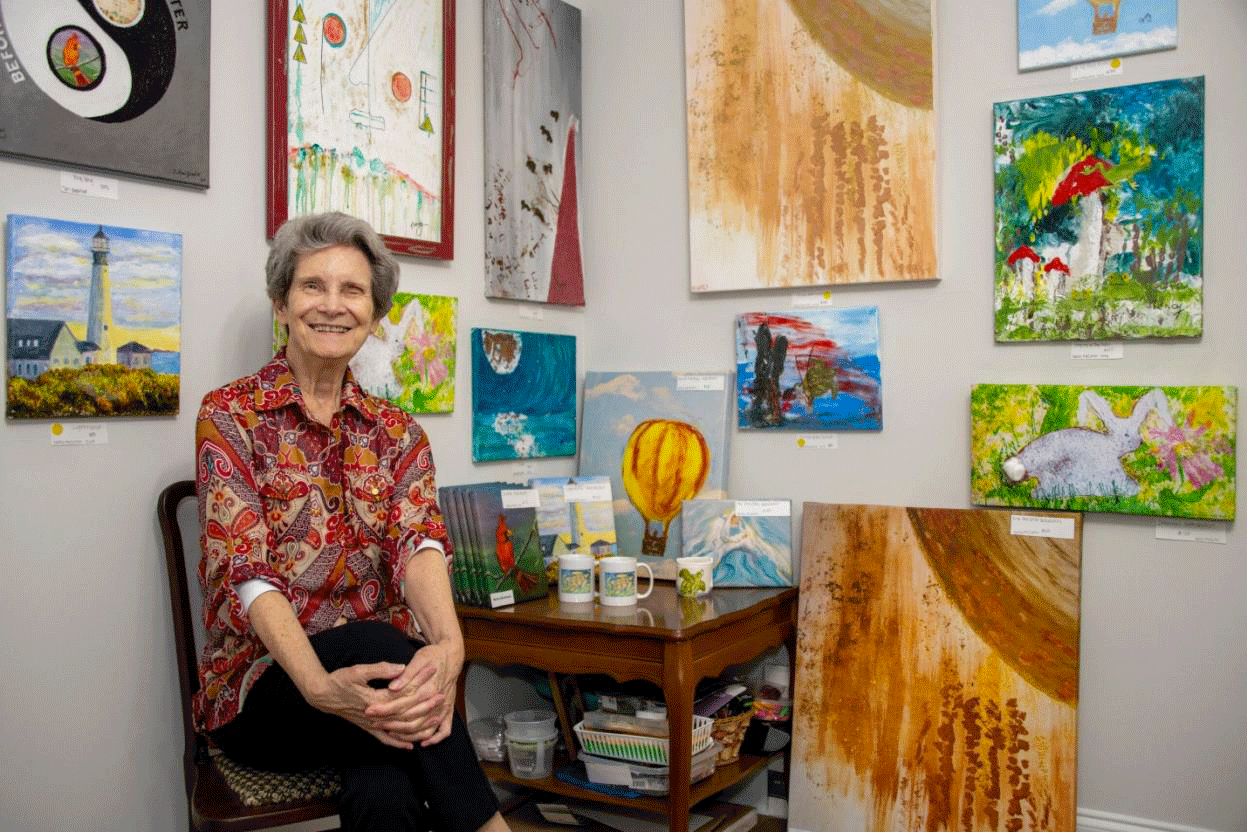
Nancy Land McCurtin
Blind Brush & Pen
Creativity Beyond Vision
Nancy Land McCurtin is an American Abstract Expressionist, author, stroke survivor, and the founder of Blind Brush and Pen. After a stroke caused total blindness, Nancy rejected the passive narrative of coping and low expectations. Instead, she chose to weaponize the raw friction and recurring frustration of her reality, transforming intense emotional energy into a striking, sophisticated method of tactile mapping.
Operating entirely by touch, memory, and an unfiltered spiritual frequency, Nancy handles the canvas and the page with uncompromising authority. Based in Surf City, North Carolina, her mission is singular and fiercely independent: to create masterful art and powerful literature that shatters traditional boundaries and commands respect for the raw power of human resilience.
Books by Nancy | Digital Art Downloads | Featured Artwork Collection
American Foundation for the Blind | National Federation of the Blind | NC DHHS Service for the Blind